The government on Wednesday said it will review the methodology for measuring poverty based on the findings of the NSSO Survey 2009-10.
State Bank of India (SBI), in a report on Friday, claimed a significant decline in the headline poverty ratio in rural areas on account of enhanced physical infrastructure, higher consumption growth in the bottom fractile and direct benefit transfers (DBTs).
As the poverty rates in the country declined below 5 percent in 2024, a research study by State Bank of India also highlighted that the extreme poverty in the country has been reduced to minimal.

'All governments are scared of a negative image.' 'Somehow, this government has a tendency to create a narrative that things are improving.' 'When the real data gives a different picture, they are upset.'

There is lack of scientific basis in computing the poverty line, says govt.

The committee, to be constituted in a couple of months, would take a comprehensive view on the entire method of estimating poverty, including the Socio-Economic Caste Census 2011.

The Planning Commission in May 2012 had constituted the expert group under the then Prime Minister's Economic Advisory Council Chairman C Rangarajan to review the Tendulkar Committee methodology for estimating poverty, following an uproar over the number of poor in the country.

'Without a poverty line, how are we to know whether poverty is the same, or it has come down or it has gone up?'
.jpg)
The CPI(M) on Thursday slammed the Planning Commission estimates on poverty levels in the country, saying these made "a mockery of life and death struggles" of the people, amidst continuous rise in prices and "massive" slashing of subsidies for the poor.

The Planning Commission's latest poverty estimates, based on the 2011-12 consumption expenditure survey, shows that across India, the number of people living below the poverty line declined by more than 15 percentage points -- from 2004-05 to 2011-12 and from 37 per cent to 21.9 per cent.

'If because of El Nino, the monsoon is affected adversely in the current year, naturally it will affect income projections and consequently Budget numbers.'

The Planning Commission has issued poverty estimates based on the Suresh Tendulkar methodology, while admitting it was not taking this seriously.
National estimates of the percentage of the population falling below the poverty line are based on surveys of sub-groups, with the results weighted by the number of people in each group.
The poverty ratio was highest in Chhattisgarh at 39.93 per cent.
The number of poor in the country declined to 27 crore (270 million) in 2011-12, from 40.74 crore in 2004-05, Minister of State for Planning and Parliamentary Affairs Rajeev Shukla said on Wednesday.
The Rangarajan panel says anyone spending up to Rs 47 a day in urban areas and Rs 32 in villages would be considered poor as of 2011-12.
The 14-member task-force will develop a working definition of poverty.
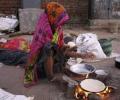
The World Bank said improved infrastructure, specifically rural electrification, has had far-ranging effects
India could gain four times over by winding up dysfunctional subsidies.

The findings of the report showed consumer spending falling for the first time in over four decades in 2017-18. The government has, however, termed it a "draft" report, reports Somesh Jha.

The findings of the report showed consumer spending falling for the first time in over four decades in 2017-18.

'We are looking at the Budget with the hope that it will address all issues even at the cost of exceeding the fiscal deficit target.'

In India, air pollution is most severe in the Indo-Gangetic Plain (northern India), where topography and meteorology concentrate pollution from energy, mobility, industry, agriculture, and other activities, the researchers said.

Is India witnessing jobless growth or is there actually no issue with employment? The real story is between the first two suggesting that though there is sufficient employment, the challenge is to create well-paying quality jobs, says Amitabh Kant.

Of the seven surveys presented under Modi govt, predictions of three were quite close to the actual GDP growth rate, one saw the base year change in between, but the last three were way off the mark.
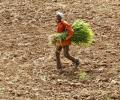
In spite of Budget's rural focus, the government has consistently stumbled in agriculture, says Shreekant Sambrani.

The Economic Survey was tabled in the Parliament on Friday.

By castigating the reforms themselves because of the remediable and reversible defaults here and there in carrying them out, Yashwant Sinha is throwing out the baby along with the bath water, says B S Raghavan.

'We are rushing to 'develop' without carefully valuing natural areas.' 'With careful land use planning and scientific zonation at least 5 to 10 per cent of the country's land can be secured for tigers and other such species, and another 5 to 15 per cent kept under low-impact uses to support biodiversity that can coexist with human uses.'
